Da Vinci 5 Is Not Just a Better Robot. It Is Intuitive's Bid to Make Surgery Measurable
Force Feedback, richer imaging, workflow integration, and case analytics move the platform beyond traditional teleoperation. The harder hospital question is whether the whole program improves care and earns its cost.
By WhatAI Editorial Team ·
Twenty million is the context
Intuitive Surgical began 2026 with a milestone few medical-device companies can claim. More than 20 million patients worldwide had undergone procedures performed by surgeons using da Vinci systems. By June 30, the installed base had reached 11,710 systems, and surgeons had performed about 1.737 million da Vinci procedures during the first half of the year. This is no longer an emerging category trying to prove that robotic-assisted surgery can become routine. It is an established layer of hospital infrastructure.
Scale changes the conversation, but it does not end it. Twenty million patients demonstrate adoption, manufacturing capacity, training reach, service experience, and deep familiarity across surgical programs. The number does not prove that da Vinci is the best approach for every operation, patient, hospital, or outcome. A platform can be globally dominant while the value of a particular robotic procedure remains dependent on the comparator, surgeon, team, learning curve, case selection, and health system around it.
That distinction is the right place to begin a 2026 review. The question is not whether da Vinci works as a technology. It plainly translates a surgeon's movements, provides magnified three-dimensional vision, and supports wristed instruments inside the patient. The useful question is what kind of program each da Vinci model enables, where the evidence is strong, where uncertainty remains, and whether a hospital can operate the platform safely enough and often enough to justify its full cost.
The surgeon is still the surgeon
The language of robotic surgery creates a persistent misconception. Da Vinci is not an autonomous surgeon. A trained clinician sits at the console and controls the instruments. The system filters tremor, scales motion, provides vision, and turns hand movement into corresponding instrument movement, but it does not decide to cut, dissect, seal, suture, or convert the operation on its own.
This matters for patients because the word robot can make responsibility feel distant. Outcomes still depend on diagnosis, patient selection, surgical judgement, technique, team coordination, anesthesia, positioning, equipment preparation, recognition of complications, and the willingness to change approach when the situation demands it. The technology can extend human capability without removing human fallibility.
It also matters for evidence. A study of robotic surgery is never a study of the machine alone. It is a study of surgeons at particular points in their learning curves, using a particular model and instruments, in hospitals with particular teams and workflows, on selected patients, against a defined alternative. When results are carried from that setting into a broad claim such as fewer complications, the context often disappears. WhatAI treats da Vinci as a powerful surgical platform, not a universal outcome guarantee.
Da Vinci 5 changes what the system can sense
Da Vinci 5 is the most important change to Intuitive's multiport platform since Xi. The company says it contains more than 150 design innovations and more than 10,000 times the computing power of Xi. The vision system increases image detail, the console has broader ergonomic adjustment, key operating-room functions are more integrated, and the platform gathers richer data about system behavior and the case.
The headline feature is Force Feedback. Supported instruments can sense push and pull at the instrument tip and return that information through the hand controls. Earlier da Vinci generations relied heavily on vision and the surgeon's learned interpretation of tissue movement. Force Feedback adds another channel, and it also creates objective force data that can be reviewed after a procedure or used in training and analysis.
That is a meaningful development, especially because force is not only something to feel. It is something a digital system can measure. Once force joins video, kinematic movement, instrument use, events, and workflow timing, da Vinci becomes a richer observation platform. The long-term significance may be less about recreating touch perfectly and more about understanding how experienced and developing surgeons interact with tissue across thousands of cases.
Force Feedback needs the right reading
Intuitive reports that surgeons in controlled testing applied up to 43 percent less force when using its Force Feedback technology. Peer-reviewed studies have also examined simulated tasks and early learning. These findings are promising, but they need a disciplined interpretation. Less applied force in a controlled setting is not automatically fewer complications, less pain, shorter recovery, or better long-term outcomes in every operation.
The feature is also not universal. Force Feedback uses specific da Vinci 5 instruments, is optional, and has regulatory boundaries. The original United States clearance contained exclusions and a specific contraindication. Intuitive later obtained selected cardiac clearances using non-Force Feedback instruments and received updates to Force Feedback instrument labeling and usable lives in March 2026. Company filings said European da Vinci 5 certification excluded Force Feedback at the time reviewed.
A hospital should therefore ask a practical set of questions. Which instruments are available for the proposed procedure? What does current local labeling permit? How is sensitivity set? What happens if force sensing is unavailable or fails? How are surgeons trained to combine force information with visual and clinical cues? Who can access the generated data? The existence of a sensor is the beginning of an implementation decision, not the end.
The operating room is part of the machine
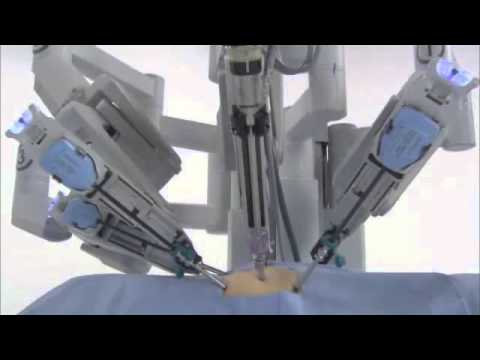
A da Vinci purchase is often pictured as a patient cart, surgeon console, and vision tower. The real product is larger. It includes instruments, accessories, energy, insufflation, imaging, operating tables, sterile processing, storage, networks, software, service, simulation, proctoring, bedside assistance, anesthesia, nursing, clinical engineering, scheduling, and emergency conversion. A hospital does not install a robot. It builds a sociotechnical system around a robot.
Da Vinci 5 tries to pull more of that system into one platform. Integrated functions, guided changes, standardized interfaces, improved troubleshooting, telepresence, and more configurable surgeon controls may reduce friction. The opportunity is not merely a faster docking sequence. It is fewer handoffs, clearer information, and a workflow in which each team member knows what will happen next.
The test is the complete case day. Measure room preparation, equipment checks, patient positioning, port placement, docking, instrument exchange, unexpected events, undocking, conversion, cleaning, reset, and turnover. Count delays, not only console time. Include the after-hours team and the staff who use the system less often. A platform that feels elegant in an expert demonstration can still create burden when routine staffing, urgent cases, and competing operating lists are introduced.
The economics live after the purchase
Intuitive's public filings describe general da Vinci system sale prices of roughly 0.7 million to 3.1 million dollars, depending on model, configuration, geography, and other factors. The Q2 2026 average selling price was about 1.59 million dollars, while the average for the first half was about 1.66 million. These figures orient the market; they are not a substitute for a quote.
The system is only one layer of cost. Instruments and accessories have limited usable lives and must be replaced. Intuitive reported about 1.83 thousand dollars of instrument and accessory revenue per da Vinci procedure in Q2 2026 and about 1.85 thousand for the first half. That is a company-wide revenue metric, not the hospital's complete cost for a case. Procedure mix, contract, instrument set, local price, reusable life, energy, accessories, and wastage all change the result.
Service, training, room changes, staffing, sterile processing, digital tools, downtime, upgrades, financing, and the opportunity cost of operating-room time also belong in the model. Intuitive offers purchases, fixed-payment leases, and usage-based operating leases. Each can make the first number look easier while moving risk elsewhere. A usage-based structure may align payments with activity, but volume commitments and contract terms can shape case allocation. A purchased system can look cheaper over time, but only if utilization and technology life match the forecast.
The responsible economic question is cost per appropriate, safely delivered procedure compared with the best reasonable alternative. That requires low, expected, and high utilization scenarios, not one optimistic case-volume line. It also requires outcomes. A program that costs more may still create value if it measurably improves care, access, staff experience, or capacity. A busy robot is not automatically a valuable robot.
Clinical evidence must stay procedure specific
Intuitive points to tens of thousands of peer-reviewed articles involving da Vinci. The literature is unquestionably extensive. Its size can still conceal unevenness. Some procedures have randomized trials, mature registries, long-term follow-up, and repeated comparison. Others rely more heavily on retrospective cohorts, selected centres, surrogate endpoints, or studies shaped by early learning curves.
Hospitals should resist platform-level conclusions. Robotic prostatectomy, hysterectomy, hernia repair, colorectal resection, lung surgery, mitral valve repair, and transoral surgery have different anatomy, alternatives, endpoints, and evidence histories. Reduced blood loss in one procedure cannot be carried casually into another. A shorter stay may reflect a broader recovery program. A lower conversion rate may reflect surgeon selection. A higher cost may change as volume, length of stay, complications, and instrument use change.
The comparison also needs to be current. Robotics should not be compared only with open surgery if advanced conventional laparoscopy is the realistic alternative. Da Vinci 5 should not inherit every result generated with earlier systems without checking what changed. Conversely, a mature team using Xi should not be assumed inferior because a newer system has more computing power. Clinical value is a relationship between technology, people, procedure, and setting.
Training is a system, not a certificate
Intuitive has built one of the most developed learning ecosystems in surgical robotics. Simulation, structured pathways, case observation, telepresence, proctoring, and analytics can support acquisition and maintenance of skills. SimNow provides a consequence-free environment for system practice, and da Vinci 5 data can make aspects of technique more visible.
None of this makes competence automatic. Simulator performance does not fully represent anatomy, bleeding, uncertainty, team communication, patient variation, or the emotional and cognitive load of a live complication. A surgeon can learn console control while the bedside team remains unprepared. A hospital can credential an operator while failing to rehearse emergency undocking or conversion after hours.
A mature program trains the room. Surgeons, assistants, nurses, anesthesia, sterile processing, clinical engineering, and emergency staff need defined roles. Progression should move from knowledge and simulation to supervised cases, procedure-specific assessment, independent privileges, and continued review. Low-volume users need maintenance plans. New instruments and software changes need targeted education. When outcomes or technical events move in the wrong direction, remediation must be available before volume pressure takes over.
Data turns every case into infrastructure
Da Vinci 5 produces a richer digital record of how the system and surgeon move through a procedure. Case Insights uses system data, movement, and video to create performance information. Force Feedback adds another signal. Telepresence allows scheduled remote observation and collaboration. Together, these tools could make learning more objective and help programs find delays, variation, and opportunities for improvement.
The same data can create risk if purpose is undefined. Surgical video may contain patient information. Movement metrics can become employment or credentialing evidence. AI-generated assessments may look precise while missing case complexity, anatomy, assistance, or a deliberate clinical choice. Remote access expands the cybersecurity boundary. Vendor-held data can complicate portability, research rights, retention, and deletion.
Hospitals need governance before dashboards become routine. Define what is collected, why, where it is stored, who can see it, how long it remains, and whether it can be used for education, quality improvement, research, marketing, employment, or credentialing. Validate metrics before they influence high-stakes decisions. Give clinicians a process to add context and challenge errors. Protect patients without making learning impossible. Data can strengthen the program only when trust is designed into it.
The model decision matters
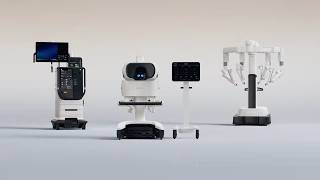
Da Vinci 5 is not the only current choice. Xi remains a widely used multiport platform with a mature instrument and workflow base. X provides a value-oriented entry using core Xi arm, instrument, and vision architecture. SP brings three wristed instruments and an articulating endoscope through one arm for supported single-port or natural-orifice procedures.
The newest model may be strategically attractive for hospitals standardizing future multiport capacity, adopting Force Feedback, or building deeper analytics. Xi may remain the better operational fit where teams, instruments, rooms, evidence, and capital plans are already aligned. X may offer an appropriate entry point for selected programs. SP is not a smaller universal da Vinci; its clearances, access, instruments, and workflow are distinct.
Start with the procedure portfolio. Then verify local labeling, model availability, room constraints, team experience, imaging, instruments, future indications, service, trade-in, lease terms, digital requirements, and total cost. Compare credible alternatives such as Hugo, Versius, Dexter, and Maestro by the same standards. Development-stage systems such as Ottava belong in horizon scanning, not a like-for-like current procurement comparison.
The WhatAI verdict
Da Vinci remains the reference platform in soft-tissue robotic-assisted surgery because it combines capable hardware with something harder to reproduce: a global base of trained users, instruments, service, education, published evidence, operating knowledge, and hospital familiarity. By mid-2026, that ecosystem was supporting 11,710 installed systems and close to 900,000 procedures in a single quarter.
Da Vinci 5 deepens the platform in the right places. Force Feedback makes tissue interaction measurable. Better imaging and ergonomics support the surgeon's senses. Integrated functions target the work around the console. Case data and simulation turn individual procedures into learning material. The system is moving from teleoperation toward a more observable, connected, and continuously analyzed surgical environment, while remaining under surgeon control.
Its strengths are also the source of its risks. The ecosystem is expensive and sticky. The data layer requires governance. High utilization can become a goal detached from patient value. Marketing claims can outrun procedure-specific evidence. Force reduction in simulation can be mistaken for universal clinical improvement. A successful hospital program must be willing to choose a non-robotic approach when that is the better option.
The right verdict is therefore not simply that da Vinci is the best robot. It is that Intuitive offers the most mature complete platform for many regulated minimally invasive programs, and da Vinci 5 is a substantial next step. Hospitals still have to earn the outcome. They do that through careful indication choice, strong teams, honest comparison, complete costing, disciplined training, safety rehearsal, data governance, and the humility to measure what happens after the console turns on.
The da Vinci family includes the fifth-generation da Vinci 5, the established da Vinci Xi, the value-oriented da Vinci X, and the single-port da Vinci SP. Each is a surgeon-controlled medical device with market-specific indications, instruments, training requirements, and operating-room workflows.
Da Vinci 5 adds force, data, workflow, and computing capacity
Da Vinci 5 introduces optional Force Feedback instruments, a redesigned three-dimensional vision system, broader ergonomic adjustment, integrated operating-room functions, and much greater computing power than Xi. It also generates richer system and case data for performance analysis. These capabilities should be evaluated by indication and program goal rather than treated as proof that every clinical outcome will improve.
The system price is only the beginning of the economic case
Intuitive has disclosed a general system sale range of about $0.7 million to $3.1 million, depending on model, configuration, geography, and other factors. Hospitals must also model instruments, accessories, service, training, facilities, staffing, cleaning, downtime, digital services, and case volume. The decisive measure is not acquisition price alone, but the cost and value of a safe, consistently utilized program.
About Intuitive Surgical da Vinci
Intuitive Surgical's da Vinci family is a hospital-based robotic-assisted surgery platform for minimally invasive procedures. The current portfolio includes da Vinci 5, Xi, X, and SP, with different multiport, single-port, capability, market, and regulatory profiles. Surgeons remain in control from a console while the system translates their hand movements into instrument motion and provides magnified three-dimensional vision. Da Vinci 5 adds optional Force Feedback instruments, a redesigned vision and console experience, substantially greater computing capacity, integrated workflow functions, and case-level data tools. Intuitive reported more than 20 million patients treated using da Vinci systems by January 2026 and an installed base of 11,710 systems at June 30, 2026. That scale does not make every procedure or program automatically beneficial. Hospitals still need indication-specific evidence, trained teams, safe conversion plans, disciplined credentialing, cybersecurity and data governance, and a complete total-cost model covering instruments, accessories, service, training, facilities, and utilization.
Use Cases
Key Features
- ✓ Surgeon-controlled robotic-assisted minimally invasive surgery
- ✓ Da Vinci 5, Xi, X, and SP system portfolio
- ✓ Magnified high-definition three-dimensional vision
- ✓ Wristed instruments with motion scaling and tremor control
- ✓ Optional Force Feedback instruments on da Vinci 5
- ✓ Firefly fluorescence imaging on supported systems and procedures
- ✓ Multiport workflows with da Vinci 5, Xi, and X
- ✓ Single-port and natural-orifice workflows with da Vinci SP
- ✓ Integrated workflow, energy, and insufflation functions on da Vinci 5
- ✓ My Intuitive and My Intuitive+ program and performance tools
- ✓ Case Insights analysis using system, movement, and video data
- ✓ SimNow simulation for system and procedure-related skills practice
- ✓ Telepresence support for scheduled observation and collaboration
- ✓ Global training, service, instruments, and program-support ecosystem
- ✓ Market-specific indications, instruments, warnings, and contraindications
Pricing
System Purchase
$0.7M-$3.1M
- • General disclosed sale range across models, configurations, markets, and geographies
- • Q2 2026 average selling price was about $1.59 million
- • Purchase commonly includes about one year of service according to company filings
Operating Lease
Custom
- • Fixed-payment arrangements are available
- • Usage-based arrangements are available
- • Terms depend on system, geography, volume, and contract
Instruments
Usage based
- • Instruments and accessories have limited usable lives
- • Q2 2026 company revenue metric was about $1,830 per procedure
- • The revenue metric is not an individual hospital price quote
Service and Digital
Custom recurring
- • Service, maintenance, training, and support requirements vary
- • Digital capabilities depend on system, market, configuration, and contract
- • Hospitals should request a complete multi-year cost schedule
Pricing varies by plan and region — see current pricing.
Plan features change — last updated: 2026-08-16.
Details
Tags
Intuitive Surgical da Vinci Community Discussions
Explore community discussions. Ask and answer questions on Intuitive Surgical da Vinci to grow and learn together.



Intuitive Surgical da Vinci Showcase


Intuitive Surgical da Vinci — Frequently Asked Questions
What is the da Vinci surgical system?
Da Vinci is a family of robotic-assisted surgical systems made by Intuitive. A trained surgeon operates from a console, using magnified three-dimensional vision and hand controls that translate movements to wristed instruments at the patient. The system does not independently perform surgery.
Which da Vinci models are current?
Intuitive's current public portfolio includes da Vinci 5, Xi, X, and SP. Da Vinci 5 is the latest multiport platform; Xi is the established versatile multiport system; X is a value-oriented multiport entry point; and SP is designed for supported single-port and natural-orifice procedures. Availability and indications vary by market.
What is different about da Vinci 5?
Da Vinci 5 adds optional Force Feedback instruments, a new vision system, redesigned controls and ergonomics, integrated workflow functions, more sensors, advanced case data, and more than 10,000 times the computing power of Xi according to Intuitive. It is an evolution of the Xi multiport architecture rather than an autonomous surgeon.
Is da Vinci 5 cleared by the FDA?
Yes. The FDA cleared da Vinci 5 in March 2024 for adult procedures corresponding broadly to Xi indications, with stated exclusions and a force-feedback contraindication. Intuitive obtained additional selected cardiac clearances in January 2026 using non-Force Feedback instruments and further Force Feedback instrument updates in March 2026. Exact indications and warnings must be checked in current labeling.
Does da Vinci 5 have a CE mark?
Yes. Intuitive announced European CE marking in July 2025 for adult and pediatric minimally invasive endoscopic procedures across specified abdominopelvic and thoracoscopic areas. Company filings said European certification excluded Force Feedback at that time, so hospitals must verify the current country, indication, instrument, and feature status.
How much does a da Vinci system cost?
Recent Intuitive filings describe a general sale range of about $0.7 million to $3.1 million depending on model, configuration, geography, and other factors. The Q2 2026 average selling price was about $1.59 million, but an individual quote can differ. Instruments, accessories, service, training, facilities, and digital services add recurring or implementation costs.
How much do da Vinci instruments cost per case?
Intuitive reported about $1.83 thousand of da Vinci instrument and accessory revenue per procedure in Q2 2026 and about $1.85 thousand for the first half of 2026. This is a company-wide revenue metric, not a hospital quote or the complete procedure cost. Actual use depends on procedure mix, contracts, instrument life, and accessories.
Does da Vinci surgery always improve patient outcomes?
No universal conclusion applies across every procedure, comparator, patient, surgeon, and hospital. Evidence should be reviewed for the exact operation and outcome, including conversion, complications, pain, blood loss, length of stay, readmission, function, cancer outcomes, learning curve, and cost. Minimally invasive and robotic approaches still carry serious risks.
How many da Vinci procedures have been performed?
Intuitive announced in January 2026 that more than 20 million patients worldwide had undergone procedures performed by surgeons using da Vinci systems. The company reported approximately 3.153 million da Vinci procedures in 2025 and 1.737 million during the first half of 2026.
What should a hospital evaluate before buying da Vinci?
Hospitals should examine procedure-specific evidence, regulatory indications, case volume, model fit, room and imaging requirements, team training, credentialing, proctoring, conversion plans, instruments, service, cybersecurity, data governance, cleaning, scheduling, downtime, total cost, equity, and measurable program outcomes.
Sources & References
- Official da Vinci surgical systems portfolio ↗
- Official da Vinci 5 product overview ↗
- Official 2024 da Vinci 5 FDA clearance announcement ↗
- Official 2025 da Vinci 5 CE mark announcement ↗
- Official 2026 da Vinci 5 cardiac clearance announcement ↗
- Intuitive Q2 2026 Form 10-Q ↗
- Intuitive Q2 2026 financial data tables ↗
- Official da Vinci 20 million patient milestone ↗
- Official Intuitive surgical safety information ↗
- FDA da Vinci 5 510(k) summary K250442 ↗
- Official Intuitive market-specific user manuals ↗
Try Intuitive Surgical da Vinci
Visit the official website to get started with Intuitive Surgical da Vinci today.
Visit Intuitive Surgical da Vinci →